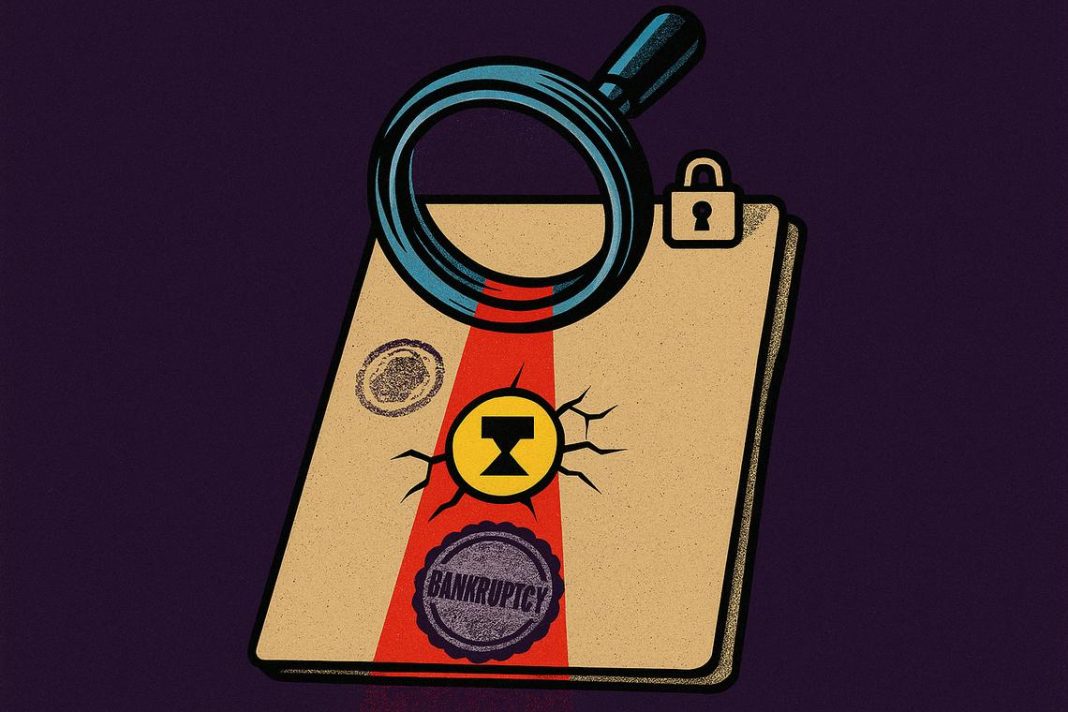

When a crypto platform goes dark and locks users out of their own accounts, the legal machinery rarely moves fast enough to matter. In the case of Knaken Cryptohandel BV, a Rotterdam-based cryptocurrency exchange, it moved — and what it found was a grim picture. A Dutch court has declared the company and its affiliated foundation bankrupt after 7 million euros in customer assets went missing, leaving an unknown number of users with little information about whether they will ever see their money again.
Key takeaways
- A Dutch court declared Knaken Cryptohandel BV and its affiliated foundation bankrupt following the disappearance of 7 million euros in customer assets.
- The Dutch Public Prosecution Service filed the bankruptcy petition on June 30 after opening a criminal investigation into the missing funds.
- Netherlands’ financial crime investigation service raided Knaken in late June, seizing devices and assets.
- Knaken does not appear in the Dutch Authority for the Financial Markets (AFM) register of authorized crypto-asset service providers.
- The Netherlands ended its MiCA transition period on June 30, 2025 — ahead of the EU-wide deadline — triggering enforcement actions against unauthorized platforms.
Dutch Court Declares Knaken Crypto Platform Bankrupt
The Rotterdam court issued its ruling confirming that the Knaken crypto bankruptcy was necessary to ensure an orderly settlement process. The trigger was straightforward and alarming: Knaken had already blocked access to its platform and accounts before going offline entirely in early June, leaving customers locked out with no path to recover their holdings independently.
The court found two compounding problems. First, the company does not hold sufficient assets to fully repay its users. Second, customers had been left with insufficient information to even determine their own legal position — meaning many did not know whether they were creditors, what protections might apply, or what options remained available to them.
The Scale of Missing Funds
According to prosecutors, 7 million euros — approximately $8 million — in customer assets are unaccounted for. That figure, attributed directly to the prosecution, defines the core of both the criminal investigation and the bankruptcy proceedings. With the company’s remaining assets falling short of that amount, the prospect of full customer recovery looks remote under current circumstances.
The gap between what users deposited and what the company holds is not just a financial problem — it is the foundation of a criminal case that remains open and evolving.
Law Enforcement Actions Following Missing Funds
Law enforcement moved on multiple fronts in late June. The Dutch Public Prosecution Service filed the bankruptcy petition on June 30, after confirming a criminal investigation into the missing funds. That timing was not coincidental: forcing a formal bankruptcy process protects any remaining assets and creates a legal framework for the appointment of administrators who can investigate what happened.
The Raid and Seizure
Separately, the Netherlands’ financial crime investigation service raided Knaken in late June, seizing devices and assets as part of its investigation. Raids of this kind are typically aimed at preserving evidence and preventing further asset transfers or destruction of records. What investigators found — and what criminal charges, if any, may follow — has not been publicly disclosed at this stage.
The convergence of a prosecution-initiated bankruptcy petition and a simultaneous financial crime raid signals that Dutch authorities treated this as more than a civil insolvency matter from the start.
Regulatory Context and AFM Enforcement
Knaken’s collapse is not happening in a vacuum. The company does not appear in the AFM’s register of authorized crypto-asset service providers — meaning it was operating without the regulatory approval required under Dutch law. That alone placed it squarely in the crosshairs of an enforcement environment that had been tightening for months.
Dutch MiCA Transition Period and Enforcement
The Netherlands ended its Markets in Crypto-Assets (MiCA) regulation transition period on June 30, 2025 — notably ahead of the EU-wide maximum transition deadline of July 1, 2026. Following that earlier cutoff, the Dutch Authority for the Financial Markets told Cointelegraph in early July that it had already begun taking supervisory and enforcement action against unauthorized crypto-asset service providers operating in the country.
That accelerated timeline matters. By choosing to end its own transition period a full year before the EU-wide deadline, the Netherlands effectively gave regulators more time to identify and act against non-compliant platforms. Knaken’s bankruptcy comes more than a year after that Dutch MiCA deadline, and the AFM’s enforcement posture may well have contributed to the pressure that brought the company’s problems to light.
The broader implication here is significant for the Dutch crypto market. Platforms that had been operating in a regulatory grey zone — tolerated during the transition period — lost that cover on June 30, 2025. Any exchange without AFM authorization has since been operating in direct violation of the rules, making Knaken’s situation a likely preview of what regulators intend to pursue further.
Founded in Rotterdam in 2017, Knaken had nine years to build a compliant business. That it reportedly never obtained AFM authorization while handling millions in customer funds raises questions that go beyond this single case — questions about oversight gaps, user due diligence, and whether the Dutch regulatory framework caught this situation early enough to prevent losses at the scale prosecutors now describe.
FAQ
Why was Knaken declared bankrupt?
A Dutch court declared Knaken bankrupt due to missing customer funds of 7 million euros and insufficient company assets to repay users. The court also noted that customers lacked sufficient information to determine their own legal position.
What legal actions were taken against Knaken?
The Dutch Public Prosecution Service filed a bankruptcy petition on June 30 after opening a criminal investigation into the missing funds. The Netherlands’ financial crime investigation service also raided Knaken in late June, seizing devices and assets.
Was Knaken an authorized crypto platform in the Netherlands?
No. Knaken does not appear in the Dutch Authority for the Financial Markets (AFM) register of authorized crypto-asset service providers, meaning it was operating without the required regulatory approval.
How does the MiCA regulation affect Knaken’s case?
The Netherlands ended its MiCA transition period early on June 30, 2025 — ahead of the EU-wide deadline of July 1, 2026. This triggered AFM enforcement actions against unauthorized platforms, placing Knaken’s unauthorized status in direct conflict with the stricter regulatory environment that had been in place for a year before its collapse.
Article produced with the assistance of artificial intelligence and reviewed by the editorial team.