

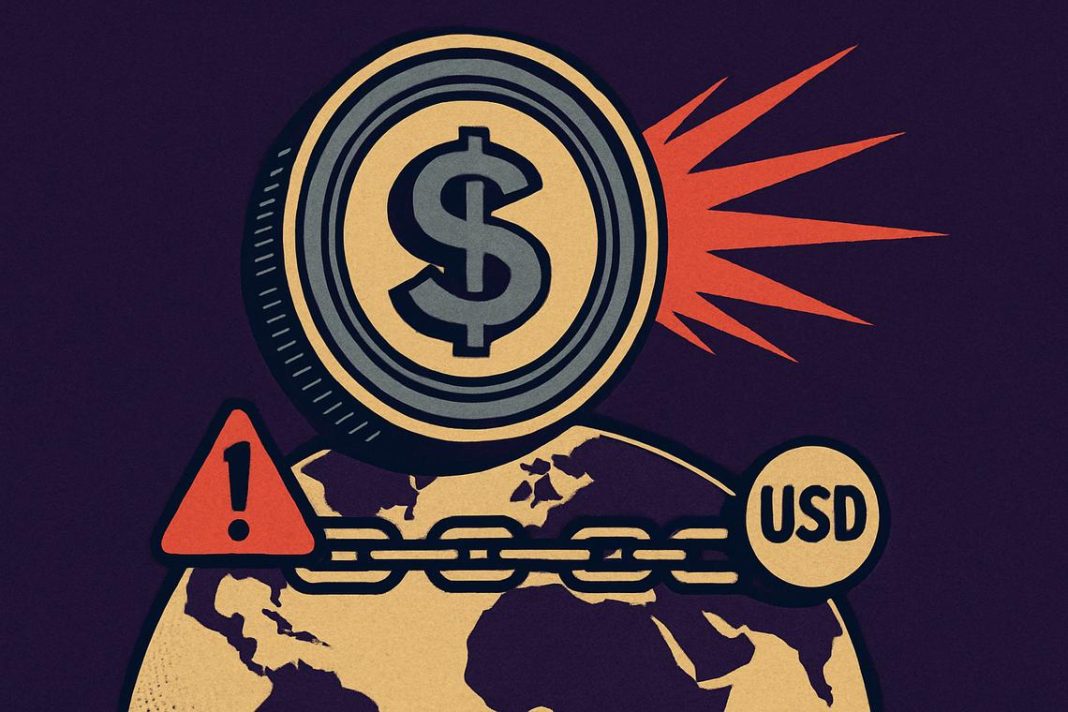

Washington may be about to turn stablecoins into a foreign policy tool. According to Bloomberg, the Trump administration is weighing a plan to promote dollar-backed stablecoins overseas through joint ventures with private companies, an effort designed to keep the greenback firmly in place as the world’s dominant reserve currency and to feed steady demand for U.S. government debt.
Key takeaways
- The Trump administration is reportedly exploring joint ventures with private firms to push dollar-backed stablecoins into international markets.
- The Treasury Department, State Department and the U.S. International Development Finance Corporation could all take part in the effort.
- USDT and USDC already control nearly 90% of the $292.49 billion stablecoin market, and issuers hold close to $200 billion in U.S. sovereign debt.
- The IMF and the Bank for International Settlements warn that wider adoption of dollar-pegged tokens could accelerate capital flight from emerging economies.
Trump Administration’s Initiative to Promote Dollar-Backed Stablecoins Globally
The core idea, according to people familiar with the discussions cited by Bloomberg, is straightforward: get more of the world using dollar-pegged digital tokens, and the dollar’s global standing gets stronger along with it. The people asked not to be named because the plans involve private discussions.
Plans for Joint Ventures with Private Companies
Rather than building government-run stablecoin infrastructure from scratch, officials are reportedly looking at partnering with private-sector firms already active in the space. The goal, as described to Bloomberg, is to help maintain the dollar’s currency preeminence while boosting demand for U.S. Treasuries.
Role of US Government Agencies
Multiple federal bodies could be pulled into the effort. The Treasury and State Departments are both named as potential participants, alongside the U.S. International Development Finance Corporation. That combination would pair financial oversight with diplomatic reach and development financing, an unusual mix that signals how seriously Washington is treating stablecoins as a lever of monetary influence rather than just a crypto-market product.
Market and Regulatory Context of Dollar-Backed Stablecoins
Any government push into this space would build on a market that is already dominated by two players. USDT and USDC, pegged 1:1 to the U.S. dollar, together account for almost 90% of the total stablecoin market value of $292.49 billion. That concentration means a federal promotional effort would likely reinforce existing market leaders rather than create new competition from scratch.
Dominance of USDT and USDC in the Stablecoin Market
Stablecoins function as tokenized versions of fiat currencies, moving over blockchain networks and widely used to fund crypto trading and cross-border payments. With USDT and USDC controlling nearly the entire dollar-pegged segment, they are the natural vehicles through which any U.S.-backed international push would flow.
Legal Reserve Requirements under the U.S. Genius Act
Under the U.S. Genius Act, stablecoin issuers are legally required to hold reserves that include dollars and short-term Treasury securities. This requirement is what directly links stablecoin growth to Treasury demand: every new dollar-pegged token issued abroad, in theory, needs a matching reserve parked in U.S. government debt or cash.
Treasury’s View on Stablecoins as a Dollar Dominance Tool
Treasury Secretary Scott Bessent has already framed stablecoins in exactly these terms, describing dollar-backed stablecoins as a tool supporting the dollar’s dominance. He noted that the dollar accounts for nearly 90% of foreign exchange transactions globally, a statistic that underlines why officials see stablecoins as an extension of, rather than a threat to, dollar hegemony.
Financial Impact of Stablecoins on U.S. Treasury Demand
This is where the strategy starts to look less like crypto policy and more like debt management. Stablecoin issuers already hold aggregate U.S. sovereign debt approaching $200 billion, putting them among the top 20 holders of Treasury securities worldwide, ahead of the reserves held by several major nations. Scaling that up through an international promotional campaign would give Washington a fresh, growing buyer base for its debt at a time when demand from traditional foreign holders has been shifting.
Why this matters: if stablecoin adoption expands overseas the way officials hope, issuers would need to hold ever-larger Treasury reserves to back those tokens. That creates a feedback loop where dollar stablecoin growth directly supports U.S. government financing, tying crypto adoption to sovereign debt markets in a way that didn’t exist a decade ago.
Systemic Risks and Warnings for Emerging Economies
What strengthens the dollar at home can create real strain elsewhere. The same mechanics that make dollar stablecoins attractive as a policy tool for Washington are precisely what worry economists focused on developing markets, particularly countries running current-account deficits that are already vulnerable to sudden capital outflows.
Challenges in Monitoring Financial Flows Due to Stablecoins
Because stablecoins move value directly over blockchains, they bypass traditional banking channels entirely. That makes it significantly harder for central banks and governments to monitor, let alone influence, those flows. If dollar-backed stablecoins reach widespread use in everyday transactions in a given country, the local fiat currency could come under real pressure as residents shift savings and payments into dollar-pegged tokens instead.
International Monetary Fund and BIS Warnings
The International Monetary Fund has warned that wider stablecoin adoption could accelerate capital flight, weaken domestic currencies and limit policymakers’ control over financial flows in emerging economies. The Bank for International Settlements has echoed that concern, and both institutions caution that widespread use of USD-pegged stablecoins may increase vulnerabilities for emerging market economies, particularly during periods of financial stress when capital tends to flee toward safer, dollar-denominated assets.
This is the second point where the story matters beyond crypto trading desks: a U.S. government-backed push to spread dollar stablecoins internationally would, by the IMF and BIS’s own logic, amplify exactly the kind of currency substitution risk that hits developing economies hardest during downturns. The same tool that reinforces dollar dominance for Washington is the one that international regulators flag as destabilizing for everyone else.
FAQ
What is the purpose of the Trump administration’s plan to promote dollar-backed stablecoins?
The plan aims to bolster the U.S. dollar’s global dominance and increase demand for U.S. Treasury securities by promoting dollar-backed stablecoins overseas.
Which U.S. government agencies are involved in promoting dollar-backed stablecoins globally?
The Treasury Department, State Department, and the U.S. International Development Finance Corporation could play key roles in the promotion.
What legal requirements govern stablecoin issuers under U.S. law?
Under the U.S. Genius Act law, stablecoin issuers must hold reserves including dollars and short-term U.S. Treasury securities.
What risks do international organizations associate with widespread adoption of dollar-backed stablecoins?
The IMF and BIS warn that such adoption could accelerate capital flight, weaken domestic currencies, and increase vulnerabilities for emerging market economies.
Article produced with the assistance of artificial intelligence and reviewed by the editorial team.