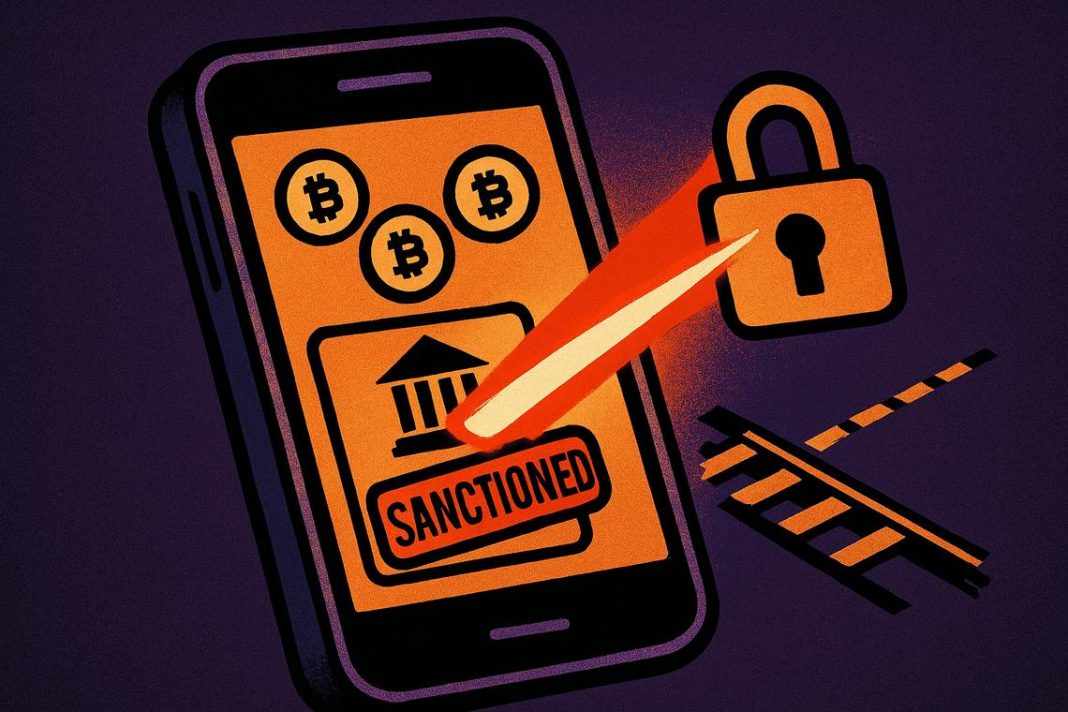

Iran is rewriting its own financial playbook. Facing a currency in free fall and increasingly cut off from global banking, Tehran has quietly loosened its foreign exchange rules to let businesses settle international trade in cryptocurrency. The shift puts Iran crypto trade sanctions dynamics at the center of a broader economic standoff with Washington, one that has already frozen more than a billion dollars in digital assets tied to the country and shows no sign of cooling off.
Key takeaways
- The Central Bank of Iran has eased foreign exchange controls, letting exporters and importers settle cross-border payments using Bitcoin and Tether instead of routing money through state-controlled currency channels.
- The Iranian rial has collapsed to more than 2 million per U.S. dollar on the open market as inflation climbs.
- Iran now accounts for roughly 4.5% of global Bitcoin mining activity, and on-chain data suggests about $10 billion in cryptocurrency moved through the country in 2025.
- U.S. and allied authorities have already frozen between $1 billion and $1.47 billion in Iranian-linked crypto assets, and the Treasury sanctioned Nobitex, Iran’s largest crypto exchange, in June for alleged sanctions evasion.
- Treasury Secretary Scott Bessent has signaled that digital assets could become the next target under the administration’s “Operation Economic Outcast,” a campaign that has already expanded to sanction 27 Iranian airlines.
Iran Loosens Currency Controls to Enable Crypto Cross-Border Trade
Iran’s central bank has changed the rules governing how money moves in and out of the country, opening the door for cryptocurrency to fill gaps left by a battered banking system. The policy shift lets exporters bring foreign earnings home through domestic crypto exchanges rather than the government’s tightly managed currency system.
Central Bank of Iran’s Regulatory Changes
Under the new approach, the Central Bank of Iran has eased controls specifically tied to foreign currency, effectively creating a legal channel for crypto to substitute for traditional trade financing. For a country locked out of most correspondent banking relationships, that’s a meaningful workaround rather than a minor technical tweak.
Use of Bitcoin and Tether for Import-Export Payments
Businesses can now use export revenue held in Bitcoin or Tether to directly pay for imported raw materials and goods, skipping the conversion step through Iran’s official foreign exchange system entirely. That matters because it gives companies more control over how and when they move money, without waiting on a currency system that’s under constant strain. USDT, pegged to the dollar, is expected to play an outsized role here, since it offers Iranian traders something the rial can’t right now: relative price stability.
Economic Context: Rial Depreciation and Crypto Activity
Iran’s pivot toward crypto didn’t happen in a vacuum — it’s a direct response to a currency crisis that has been building for months. The rial’s collapse and Iran’s outsized footprint in Bitcoin mining together explain why digital assets have become so central to the country’s trade strategy.
Sharp Depreciation of Iranian Rial
The Iranian rial has weakened to more than 2 million per U.S. dollar on the open market, a depreciation steep enough to erode purchasing power and complicate everyday business planning. Combined with sharply rising inflation, that slide has made holding rial-denominated cash increasingly impractical for companies trying to plan imports or exports months in advance.
Iran’s Role in Global Bitcoin Mining and Crypto Volume
Iran isn’t a passive bystander in crypto markets — it’s an active participant. The country accounts for around 4.5% of global Bitcoin mining activity, according to blockchain analytics firm Elliptic. On-chain data cited in industry reporting also points to roughly $10 billion worth of cryptocurrency moving through Iran in 2025, a volume that underscores how deeply digital assets have already embedded themselves in the country’s economy, sanctions or no sanctions.
US Sanctions Impact and Enforcement Actions on Iranian Crypto Sector
Washington isn’t standing still while Iran adapts. U.S. authorities have already frozen a substantial chunk of Iranian-linked crypto holdings and taken direct aim at the exchange infrastructure that makes crypto trade possible in the first place.
Sanctioned Crypto Assets and US Treasury Measures
The U.S. and allied nations have frozen or blocked an estimated $1 billion to $1.47 billion in Iranian-linked crypto assets to date. That figure gives a sense of scale: even as crypto offers a workaround for sanctioned trade, a meaningful share of the assets flowing through that channel are being intercepted or locked down before they can be used.
Sanctions Against Nobitex Exchange and Increased US Pressure
In June, the Treasury sanctioned Nobitex, Iran’s largest crypto exchange, accusing it of facilitating sanctions evasion. That action targeted the very infrastructure Iranian businesses would rely on to convert crypto into usable trade payments, signaling that Washington views exchanges — not just individual transactions — as fair game. This escalation fits inside a wider campaign: the Treasury has separately sanctioned dozens of Iranian airlines and foreign banks with financial ties to Tehran, part of an effort officials have described as an attempt to isolate Iran’s economy on multiple fronts at once.
Implications and Risks of Enhanced Crypto Use in Sanctioned Environment
Why does this matter beyond Iran’s borders? Because it’s a live test case of whether crypto can genuinely function as a sanctions workaround at national scale — and whether regulators can close that gap fast enough to matter.
Potential Targeting of Digital Assets Under US “Operation Economic Outcast”
Treasury Secretary Scott Bessent has warned that digital assets could become the next front in the administration’s “Operation Economic Outcast,” a sanctions campaign already responsible for penalizing dozens of Iranian airlines and financial institutions tied to Tehran. That warning suggests crypto exchanges, wallets, and intermediaries connected to Iranian trade could face intensified scrutiny in the months ahead, following the same playbook already used against Nobitex.
Risks for Iranian Businesses and International Trade Partners
For Iranian exporters and importers, the calculation is genuinely double-edged. Crypto offers a rare degree of freedom from a banking system largely closed off by sanctions, letting businesses move money and settle trade without waiting on correspondent banks that may refuse to touch Iranian transactions at all. But that same visibility on public blockchains, combined with Washington’s demonstrated willingness to sanction exchanges directly, means greater crypto reliance could also invite closer monitoring — and potentially new penalties — from U.S. regulators tracking the flow of Iran crypto trade sanctions activity in near real time.
FAQ
What changes has Iran made to its foreign exchange rules regarding cryptocurrency?
Iran has eased foreign exchange controls, allowing businesses to use cryptocurrencies like Bitcoin and Tether for cross-border trade and payment settlements instead of relying solely on the government-controlled currency system.
Why is Iran turning to cryptocurrency for cross-border trade?
U.S. sanctions have restricted traditional banking and foreign exchange channels, so crypto offers Iranian businesses more freedom and a practical way to keep trade moving despite those limitations.
What risks does Iran face by increasing cryptocurrency use amid US sanctions?
The U.S. is ramping up sanctions pressure on Iran’s crypto sector, having already sanctioned exchanges like Nobitex, with Treasury Secretary Scott Bessent warning that digital assets could become the next target under Washington’s broader economic pressure campaign.
How significant is Iran’s role in global Bitcoin mining?
Iran accounts for about 4.5% of global Bitcoin mining activity, according to blockchain analytics firm Elliptic, making it a notable contributor to worldwide mining output despite ongoing sanctions.
Article produced with the assistance of artificial intelligence and reviewed by the editorial team.