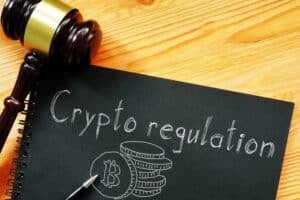

Regulation: Thailand has adopted a bold regulatory sandbox to explore and regulate crypto services, promoting the adoption of Bitcoin ETFs and tax incentives for cryptocurrencies throughout 2024.
Let’s see all the details below.
Sandbox on regulation in Thailand: innovation and security in the crypto sector
As anticipated, the financial regulatory authorities of Thailand have launched a new program to experiment with services related to crypto within a dedicated regulatory sandbox.
On August 9, the Securities and Exchange Commission (SEC) of Thailand announced the launch of the Digital Asset Regulatory Sandbox, created to promote development and innovation in the digital asset sector.
The SEC has declared the following:
“The stakeholders are invited to participate in the sandbox to test their services related to digital assets, thus encouraging innovation in the capital market through a flexible regulatory framework.”
Adding then that the sandbox is officially operational starting from today.
Rules for eligible service providers
The launch of the Digital Asset Regulatory Sandbox in Thailand follows the approval, by the SEC board, of a resolution that established its creation in March 2024.
Subsequently, the authority defined the regulations for the eligible services, including the necessary qualifications for participants and the scope of the tests.
Among the eligible service providers, there are six categories: exchange of digital assets, brokers, dealers, fund managers, advisors, and custodial wallet providers. The SEC specified:
“The participants in the sandbox must integrate their innovations into the development of digital asset services in the Thai capital market or participate in a sandbox of the monetary market regulatory agency.”
The Thai SEC will consider various aspects, such as financial solidity, operational effectiveness, management structure, and other conditions.
This is to ensure that the participants in the sandbox are well prepared to operate within the regulatory context.
Furthermore, the participants must clearly outline the scope of the services offered to minimize potential risks and impacts during the trial period, which must not exceed one year from the date of approval.
The SEC has also specified that participants can request an extension of the testing period at the expiration of the sandbox.
A more open approach to cryptocurrencies
Thailand is establishing itself as a relatively favorable regulatory environment for cryptocurrencies.
Even while regulating cryptocurrency transactions, in fact, the Thai authorities have implemented strict regulations to protect the rights of investors and maintain financial stability.
In recent months, the country has adopted a more open approach towards cryptocurrencies, approving several key initiatives.
In June 2024, the Thai SEC gave the green light to One Asset Management (ONEAM) to launch the first exchange-traded fund (ETF) on Bitcoin in Thailand.
This fund invests in eleven leading global funds and is reserved for wealthy and institutional investors.
Previously, the SEC had modified local regulations to allow certain investors to access spot ETFs on Bitcoin listed in the United States, starting from March 2024.
Also in March, the Thai government introduced tax incentives to encourage the use of investment tokens in fundraising.
Finally, in January, the SEC removed the restrictions that limited the investments of small investors in digital tokens backed by real estate or infrastructure projects, increasing the maximum investment limit.