
Wall Street had a rough Wednesday, and the reason wasn’t a surprise earnings miss or a scary headline out of Washington. It was bonds. A sharp jump in Treasury yields to levels not seen in nearly two decades rattled investors already on edge about persistent inflation, sending all three major U.S. indexes lower as traders recalibrated their expectations for Federal Reserve rate hikes in the months ahead.
Key takeaways
- The S&P 500 fell 0.75% to 7,706.03, the Nasdaq Composite dropped 1.13% to 26,936.04, and the Dow Jones Industrial Average lost 352.10 points, or 0.68%, closing at 51,511.59.
- The 10-year Treasury note yield jumped to 5.135%, its highest level since July 2007, while the 2-year Treasury note climbed to 4.947%, a peak not seen since May 2024.
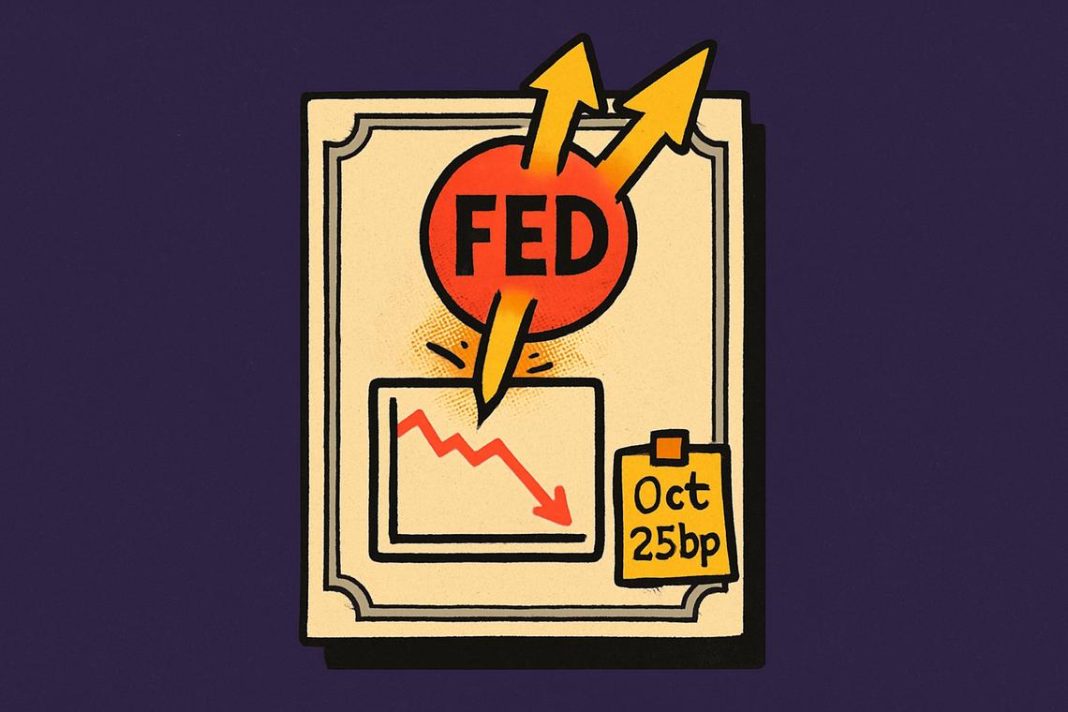
- Traders now assign over 66% odds to a 25 basis point rate increase in October, according to the CME FedWatch tool, up sharply from just 8.8% a month ago.
- Brent crude futures rose 3.9% to $103.08 per barrel and WTI crude gained 1.8% to $92.16, even as geopolitical talks continued on Iran and the U.S.-China trade truce was extended two months through January 10.
US Stock Market Drops on Rising Bond Yields
All three benchmarks closed lower Wednesday as bond market stress spilled over into equities. The S&P 500 shed 0.75% to finish at 7,706.03, the Nasdaq Composite declined 1.13% to 26,936.04, and the Dow Jones Industrial Average gave up 352.10 points — a 0.68% drop — to close at 51,511.59.
The selling wasn’t evenly spread. Utilities and consumer discretionary stocks led the retreat, each falling more than 1% during the session. According to CNBC, utilities were the day’s biggest laggard, down 1.7%, followed by consumer discretionary at 1.5% and communication services at 1.4%. Energy was one of the few bright spots, rising about 1.1% alongside the rally in oil prices, while industrials edged up roughly 0.2%. Nine of the eleven S&P 500 sectors finished in negative territory.
Why the selloff matters
When bond yields rise this fast, it tends to make borrowing more expensive across the economy — for mortgages, corporate debt, and credit cards alike. That squeeze shows up first in rate-sensitive sectors, which explains why utilities and consumer-facing stocks took the hardest hits while energy, buoyed by climbing oil prices, held up better than the rest of the market.
Treasury Yields Reach Highest Levels Since 2007
The bond market did most of the damage. The benchmark 10-year Treasury note surged to 5.135%, its highest point since July 2007, while the 2-year Treasury note reached 4.947%, a level not touched since May 2024.
The move followed a batch of purchasing managers’ index data that came in hotter than expected, reinforcing the sense that inflation isn’t cooling as fast as policymakers had hoped. Massimo Santicchia, head of U.S. equities at Procyon, said corporate earnings remain solid, but inflation is fueling investor unease. He pointed out that price pressures are spreading beyond energy costs and into the services sector — a trend that tends to be stickier and harder for central banks to tame.
Santicchia added that a pause from the Federal Reserve looks unlikely for now, and he expects two to three more rate increases before the tightening cycle winds down.
Federal Reserve Rate Hike Expectations Rise
Traders are now leaning heavily toward another move from the central bank as soon as next month. Data from the CME FedWatch tool show the odds of a 25 basis point hike in October have climbed above 66%, a striking jump from the 55.4% probability priced in just the day before and a world away from the mere 8.8% likelihood seen a month earlier.
Federal Reserve Governor Michael Barr added weight to that outlook Wednesday, telling a housing conference in Chicago that further tightening is probably still needed. “In my base case, further policy adjustments are likely to be needed to ensure inflation comes down to target in a timely fashion,” he said. “We want to support sustainable, durable growth in support of maximum employment, and price stability is crucial to that.”
Barr also acknowledged that growth and employment remain solid but said inflation is still running above the Fed’s 2% target without clearly trending toward it. He noted that the risks tied to hitting that inflation goal have grown, even as labor market risks have eased — language that markets read as a signal the Fed isn’t done raising rates.
This is one of the clearer signs yet that Federal Reserve expected rate hikes are no longer a distant possibility in investors’ minds but a near-term certainty they’re actively pricing into bond and equity markets alike. When a Fed governor frames further hikes as the “base case,” it tends to remove ambiguity that markets otherwise use to justify optimism.
What changes for investors now
Higher-for-longer rate expectations reshape how money flows. Bonds offering yields above 5% become more attractive relative to stocks, especially for income-focused investors, which helps explain why equities came under pressure even though corporate fundamentals haven’t necessarily deteriorated.
Oil Prices Rally Amid Market and Geopolitical Developments
Unlike equities, the energy sector posted gains, with Brent crude futures for November delivery surging 3.9% to close at $103.08 per barrel and U.S. West Texas Intermediate crude rising 1.8% to finish at $92.16 per barrel.
Geopolitics added another layer of uncertainty to an already jittery market. President Trump said U.S. and Iranian officials held a three-hour meeting during the United Nations General Assembly in New York, calling it a “very good meeting.” He had earlier told the U.N. that he faces a “big decision” over whether to pursue diplomacy with Iran or take a tougher stance.
Meanwhile, trade tensions between the world’s two largest economies eased slightly. Treasury Secretary Scott Bessent announced a two-month extension of the U.S.-China trade truce, pushing the deadline to January 10. The development comes ahead of a planned meeting between Trump and Chinese leader Xi Jinping, which markets are watching as the next major catalyst.
Futures pointed to further losses heading into Thursday’s session, with yield-driven anxiety still dominating trading desks. Whether the bond market stabilizes or keeps climbing may hinge less on any single headline and more on how convincingly the Fed signals its next move — and how quickly inflation data backs up, or undercuts, the case for more Federal Reserve rate hikes.
FAQ
What caused the recent decline in US stock markets?
The decline was caused primarily by a surge in Treasury yields to their highest levels since July 2007, fueled by persistent inflation and expectations of further Federal Reserve rate hikes.
How high did Treasury yields rise and why is this significant?
The 10-year Treasury note yield rose to 5.135%, the highest since July 2007, signaling tightening financial conditions and rising borrowing costs that concern investors.
What is the market expectation for Federal Reserve interest rate changes?
Market participants expect the Federal Reserve to raise interest rates two to three more times, with over 66% odds of a 25 basis point hike in October according to the CME FedWatch tool.
What recent geopolitical events might influence markets?
President Trump met with Iranian officials during the United Nations General Assembly, and the U.S.-China trade truce was extended two months through January 10 — both developments adding to market uncertainty heading into a planned Trump-Xi meeting.
Article produced with the assistance of artificial intelligence and reviewed by the editorial team.